Creative advertising combines original concepts, storytelling, and platform-native execution to drive attention, brand differentiation, and measurable business outcomes. This guide explains what creative advertising is, why it matters for both brand and performance goals, how to evaluate and choose a creative advertising agency, and how to translate standout campaign lessons into repeatable practice. Many brands struggle to balance disruptive creative with measurable ROI; this article offers practical frameworks for briefing, ideation, testing, and measurement so teams can scale creativity without sacrificing accountability. You’ll find clear definitions, tactical checklists, examples of successful campaigns, trend analysis for 2025—especially AI, short-form video, authenticity, and interactivity—and actionable measurement templates for KPIs and optimization. Reading this will leave you prepared to commission creative work, brief agencies effectively, and judge creative performance against modern advertising effectiveness metrics.
What Is Creative Advertising and Why Does It Matter?
Creative advertising is the strategic use of original ideas, narrative structure, and design to capture attention and create lasting brand equity while supporting business objectives. It works by combining novelty (to break attention thresholds), storytelling (to form emotional connections), and media optimization (to match format and audience behavior), producing higher recall and conversion potential than formulaic execution. The result is differentiated brand positioning, improved campaign engagement, and a stronger platform for long-term growth when paired with measurement.
Creative advertising sits at the intersection of brand communications and performance marketing, and its role changes depending on campaign goals. For awareness campaigns the emphasis is narrative and memorability; for performance campaigns the emphasis shifts to creative testing and conversion-focused hooks. Understanding this balance leads directly to practical selection and briefing criteria for agencies and creative partners, which we’ll examine next.
Creative advertising’s strategic role also explains why teams must adopt iterative testing and cross-functional alignment between creative, media, and analytics to realize full value. That alignment is the next subject: how creativity drives differentiation and engagement in measurable ways.
How Does Creative Advertising Drive Brand Differentiation and Engagement?
Creative advertising drives differentiation by introducing novel concepts or disruptive framing that break through habitual audience filters and form memorable associations with the brand. Novelty captures attention; a succinct narrative and emotional hook convert attention into engagement and recall, which translates into higher aided and unaided brand awareness. Measurable indicators of this process include attention metrics (view-through rates, active view), brand lift studies, and engagement signals on short-form platforms.
Campaign mechanics that consistently improve differentiation combine a strong central idea with platform-native edits and a clear call to action, then iterate on variants guided by early performance. Recent research in attention economics shows that small creative differences can produce outsized changes in recall and ad effectiveness, so disciplined creative testing is essential. These mechanisms naturally lead into the practical elements that underpin creative work — the core elements and techniques used by successful creative teams.
What Are the Core Elements and Techniques of Creative Advertising?

Creative advertising relies on a set of core elements—compelling storytelling, precise visual design, strategic copywriting, and media-aware formatting—that work together to produce attention and action. Storytelling creates a narrative arc; visual design ensures the idea reads instantly; copy adds clarity and persuasion; media planning places the creative where the audience is most receptive. Each component must be adapted to the execution format, whether a 6-second short-form video, an interactive unit, or an experiential touchpoint.
Best practices include starting with a one-sentence creative proposition, building adaptable story beats for platform variations, and creating multiple variants for rapid A/B/n testing. Rapid iteration requires production workflows that separate concept development from platform adaptation, enabling teams to test creative hypotheses quickly. These techniques set the stage for agency collaboration and selection, which determines how well brands translate strategy into creative output.
Which Are the Best Creative Advertising Agencies and How to Choose Them?
Choosing a creative advertising agency means matching your strategic needs to an agency’s strengths in idea generation, platform-native production, measurement, and cultural fit. The right partner demonstrates both creative craft and measurement discipline, offering concept-to-execution workflows, cross-format production capabilities, and integrated analytics. A concise selection checklist helps prioritize priorities and avoid common procurement pitfalls.
Use the checklist below to assess prospective agencies, introducing each criterion before applying it to proposals and pitches.
- Creative Relevance: Does the agency show work that aligns with your audience and category rather than unrelated creative trophies?
- Measurement & Testing: Does the agency integrate testing frameworks, creative variant workflows, and performance analytics?
- Platform Production: Can the agency deliver platform-native formats (short-form video, interactive) at scale?
- Process Transparency: Are roles, timelines, and pricing models clear and reproducible?
- Cultural Fit: Will the agency’s approach align with your brand’s risk tolerance and speed requirements?
This checklist leads naturally to the concrete services top agencies typically offer and the expected outcomes you should seek when evaluating proposals.
What Services Do Top Advertising Agencies Offer in Creative Advertising?
Top creative advertising agencies offer integrated services ranging from strategy and concepting to production, media integration, and analytics. Strategic services include brand positioning, creative strategy, and audience insight; production services encompass scriptwriting, video and motion production, and platform-specific editing; and measurement services provide A/B/n testing, creative analytics, and campaign attribution modeling. These capabilities combine to produce outcomes like increased brand lift, higher engagement rates, and improved conversion metrics when paired with consistent testing.
What Criteria Should You Use to Select the Right Creative Advertising Agency?
Selecting the right agency requires applying weighted criteria to proposals and interviews, then scoring each candidate objectively. Prioritize demonstrable results in your category, evidence of iterative testing, clarity in pricing and timelines, and the ability to scale production. Ask targeted RFP questions about creative variant throughput, sample production timelines for platform adaptations, and the tools used for creative analytics.
A practical scoring guide accelerates decision-making: allocate weight to creative relevance (30%), testing & measurement (25%), production capability (20%), cost transparency (15%), and cultural fit (10%). This structure keeps selection grounded in business outcomes rather than superficial portfolio appeal, and sets clear expectations for post-award governance and KPIs.
What Are the Most Successful Creative Advertising Campaigns and Their Key Takeaways?
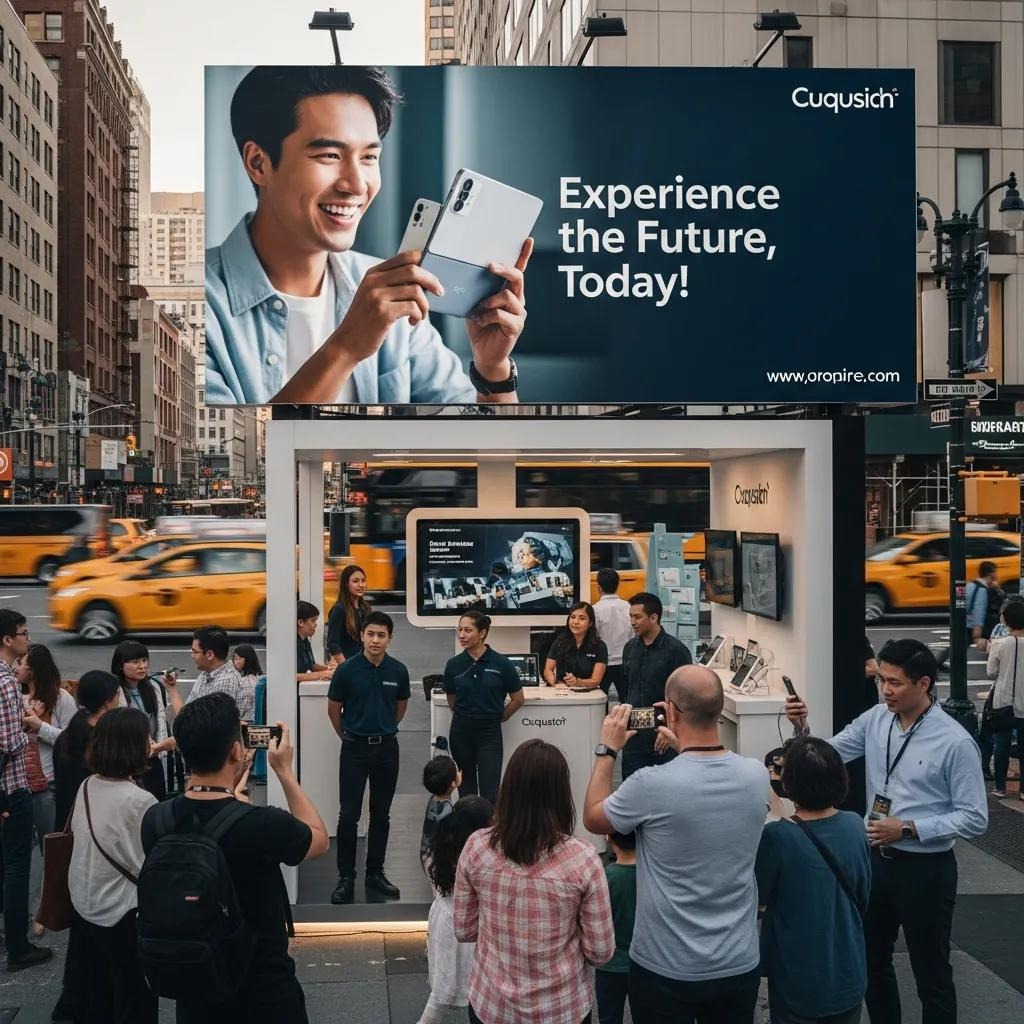
Analyzing standout campaigns reveals repeatable tactics that translate across budgets and industries. Successful creative campaigns typically center on a clear, simple idea executed with platform-native edits, strong storytelling beats, and a testing-first approach that allows for rapid optimization. The lessons from these campaigns focus on narrative clarity, allocation of media to support story beats, and robust measurement to validate creative choices.
Below is a concise list of transferable takeaways distilled from recent high-performing campaigns and case summaries.
- Single Idea Focus: Campaigns that distill messaging into one memorable proposition drive higher recall.
- Platform-First Editing: Tailoring cuts and hooks per platform improves early engagement and lowers CPM waste.
- Early Variant Testing: Testing multiple creative variants in initial spend phases accelerates learning and scales winners.
These takeaways point to practical shifts in planning and execution teams should make; next we examine specific recent campaigns that showcase these tactics.
Which Recent Campaigns Showcase Innovation and High ROI in Creative Advertising?
Recent exemplary campaigns from 2022–2024 demonstrate innovation in short-form storytelling, interactive formats, and data-driven personalization. Each successful campaign combined a tight creative idea with rapid production workflows to adapt the concept across channels and multiple audience segments. Results typically appeared as strong lift in brand metrics, higher view-through rates on short-form platforms, and measurable conversion lift in attribution windows.
Examining these cases highlights the importance of unified creative-to-media workflows where early metrics inform production of follow-up assets. The mechanics behind those successes—clear hooks in the first seconds, audience-specific edits, and iteration based on variant performance—explain why creative testing should be embedded in campaign roadmaps rather than treated as an afterthought. Those mechanics also feed into how narratives and emotions are structured, which we explore next.
How Do These Campaigns Use Storytelling and Emotional Connection Effectively?
Top campaigns often structure storytelling into compact emotional arcs that fit platform attention spans: setup (establish context), disruption (introduce tension or insight), and payoff (brand resolution and action). Emotional resonance comes from relatable characters, authentic details, and a clear stakes statement tied to the product or service. Effective campaigns sequence media to deepen the narrative—teasers for discovery, longer cuts for engaged viewers, and short hooks for retargeting.
These narrative techniques are most effective when paired with measurement that links story beats to attention and conversion metrics, enabling teams to refine which emotional triggers reliably drive business outcomes. Understanding these mechanisms clarifies why 2025’s trends—AI-assisted creative, authenticity, and short-form video—are central to modern creative practice.
What Are the Latest Advertising Industry Trends Shaping Creative Advertising in 2025?
In 2025, creative advertising is shaped by four major trends: AI-assisted creative generation and testing, the dominance of short-form video, a premium on authenticity and UGC-like aesthetics, and interactive/gamified ad experiences that boost dwell and loyalty. Each trend alters workflows, production budgets, and measurement priorities, making it essential for creative teams to adopt new tools and guardrails while preserving narrative integrity.
Below is a direct list of top trends with one-line impact statements to summarize their importance for practitioners.
- AI for Creative Variation: Rapid generation and testing of ad variants increases throughput and lowers cost-per-test.
- Short-Form Video Dominance: Platforms favor concise hooks and native editing styles, shifting attention toward vertical, mobile-first creative.
- Authenticity & UGC Styles: Lo-fi production and real people drive trust and perceived honesty, improving conversion in many categories.
- Interactive & Gamified Ads: Engagement mechanics increase dwell time and offer richer data signals for personalization.
AI is transforming creative advertising by automating variant generation, predicting performance through creative-scoring models, and personalizing creatives at scale for audience segments. Practical AI workflows combine human-led concepting with AI-assisted adaptation—generating multiple edits, headlines, and localized versions, then using predictive models to prioritize variants for live testing. This increases throughput and reduces time-to-learn, enabling more rapid scaling of winning concepts.
Indeed, the integration of AI is increasingly recognized as a significant driver for enhancing design and creative processes within the advertising industry.
AI in Creative Industries: Enhancing Advertising Design
Globally, the cultural and creative industries are becoming increasingly significant drivers of economic growth1,2,3. This industry spans not only traditional arts and design fields but also includes diverse sectors such as advertising, media, software, and gaming4,5,6. Existing design practices predominantly depend on the experience and intuition of designers. While effective for certain straightforward creative tasks, these approaches exhibit considerable limitations when confronted with complex cultural and creative design challenges.
The application of artificial intelligence-assisted technology in cultural and creative product design, 2024
Ethical and quality guardrails remain critical: teams must validate AI outputs for brand safety, representation, and factual accuracy, and maintain creative oversight to avoid homogeneous "AI-sameness." Effective adoption uses AI to amplify human creativity, not replace it, and pairs AI with robust measurement to ensure predicted lifts materialize in real-world metrics. These considerations set up why authenticity and short-form formats remain foundational despite AI’s rise.
Why Are Authenticity, Short-Form Video, and Interactive Content Essential Today?
Authenticity, short-form video, and interactive content perform well because they match contemporary attention patterns and trust signals. Short-form video rewards immediate hooks and quick narrative payoffs; authenticity—real people, genuine moments, and UGC-like production—improves perceived trustworthiness; interactive mechanics increase active engagement and provide first-party signals that improve personalization. Together, these formats lower resistance to engagement and improve conversion pathways.
Tactically, creators should prioritize clear hooks in the first 1–3 seconds, use native editing and captions for sound-off environments, and design interactive elements that reward deeper exploration without creating friction. These format tactics feed directly into the campaign development and measurement process covered next.
How to Develop and Measure an Effective Creative Advertising Strategy?
An effective creative advertising strategy follows a repeatable sequence: brief clearly, ideate with constraints, produce MVP creative for testing, optimize and scale winners, and measure against prioritized KPIs. This stepwise blueprint reduces risk, clarifies responsibility, and shortens learning cycles by building measurement into each phase rather than appending it after launch. The steps below introduce a practical workflow that teams can adopt immediately.
- Brief Clearly: Define objective, target behaviors, key message, and success metrics.
- Ideate Constrained: Use divergent sessions to generate ideas, then converge on testable hypotheses.
- Test Rapidly: Produce minimum viable creative and run A/B/n tests to identify winners.
- Scale Winners: Allocate incremental spend to validated variants and produce scaled assets.
- Measure Continuously: Track attention, engagement, and conversion KPIs tied to business outcomes.
These steps create a loop where measurement informs subsequent ideation and production, improving long-term creative productivity and ROAS. The next sections detail practical briefing elements and KPI guidance for operational measurement.
What Are the Steps for Briefing, Ideation, and Execution in Creative Advertising?
A concise briefing template includes objective (brand or performance), target audience with behavioral insight, single-minded proposition, mandatory assets or constraints, and success metrics with timelines. Ideation should begin with divergent workshops that generate multiple concepts, followed by convergent sessions that translate ideas into storyboards and testable scripts. Execution phases separate concept shoots from platform adaptation so that multiple formats can be produced quickly without repeating foundational production.
Research further supports the effectiveness of structured ideation techniques, such as the Templates method, in boosting originality without compromising strategic goals.
Creative Advertising Ideation: Templates for Originality & Strategy
To develop more creative advertising, scholars advocate ideation techniques and one of the most strongly supported is the Templates method. This research explores the efficacy of Templates, and evaluates its effectiveness compared to other creative ideation approaches. The Templates approach improves the originality of advertising, with no detrimental influence on strategy.
Creative performance in professional advertising development: The role of ideation templates, consumer insight, and intrinsic motivation, A Tevi, 2025
Practical tips include setting a creative-variant cadence (for example, produce 6–12 variants per core idea), assigning a test owner responsible for data collection, and scheduling learn-and-adapt checkpoints during the first two weeks of live testing. These governance steps ensure creative outputs are both imaginative and accountable, leading into the KPI framework that quantifies success.
Which KPIs and Analytics Best Measure Creative Advertising Effectiveness and ROI?
KPIs should map to the campaign objective: awareness (reach, impressions, aided recall), engagement (CTR, view-through rate, watch time), and business outcomes (conversion lift, ROAS, incremental revenue). Measurement requires a mix of attention and behavioral metrics plus experiment-driven designs such as randomized holdout groups, brand-lift studies, and multi-touch attribution models. Benchmarks depend on platform, format, and category, so establishing relative baselines early is crucial.